
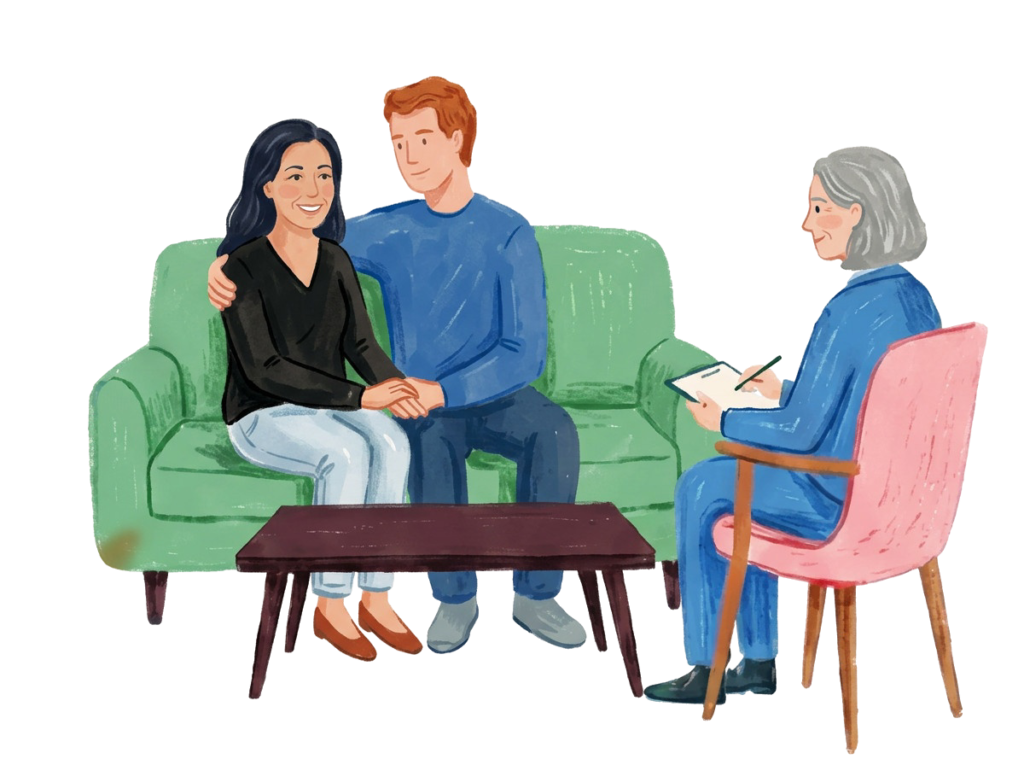
Nem todo casal em crise precisa de separação
- Cognitive-Behavioral Therapy (CBT)
- Dialectical Behavior Therapy (DBT)
- Psychodynamic Therapy
- Humanistic/Experiential Therapy
- Interpersonal Therapy
- Supportive Therapy
Como é a terapia de casal comigo?
O Processo
Toda relação passa por fases difíceis.
A diferença está em como o casal escolhe enfrentá-las.
Quando a terapia de casal pode ajudar
Ciclos de conflito que se repetem
Dificuldade de comunicação
Distanciamento emocional
Crise de confiança
Transições de vida a dois
Prevenção e fortalecimento
Toda relação passa por fases difíceis. A diferença está em como o casal escolhe enfrentá-las.

Meet our founder - Diana Fletcher
Our goal isn’t to keep you in therapy forever. It’s to help you find your footing—so you can walk forward on your own.
Our therapists bring years of experience helping people just like you—people who are tired of carrying everything alone. We use proven, evidence-based methods tailored to what you actually need, not a one-size-fits-all approach.
Whether you prefer meeting in person or from the comfort of home, whether you’re seeking individual therapy or couples counseling, we’re here to meet you where you are.
Who We Are
We’re a team of licensed counseling psychologists united by one belief: therapy should feel like a safe conversation with someone who truly understands. Each therapist brings unique expertise, but we all share a commitment to meeting you exactly where you are—without judgment, without pressure.
A Judgement Free Space
This is where you don’t have to have it all together. Where messy is okay. Where your feelings are valid—all of them. You can be honest here. We’ll listen without judging, without fixing, without telling you how you “should” feel. Just understanding. Just support.
Our Approach to Therapy
We use proven methods like CBT, EMDR, and attachment theory—but we tailor everything to you. Your therapy isn’t one-size-fits-all. It’s built around your story, your pace, your needs. Some need tools. Some need space to process. Most need both. We’ll figure it out together.
Some symptoms to watch out for
Early signs that shouldn’t be ignored
- Catastrophic thinking
- Overestimating the potential for severe consequences
- Excessive Worrying
- Obsessive Thoughts & Behaviors
- Social Phobia or Other Phobias
- Procrastination & Behavioral Avoidance
- Physical Distress or Fear
- Panic Attacks
Hear from our clients
Stories of transformation
Frequently
Asked Questions
Questions we often asked
Q1: Who can benefit from individual therapy?
Individual therapy can help children, adolescents, and adults experiencing anxiety, depression, stress, trauma, relationship difficulties, or life transitions.
Q2: How long does therapy usually last?
The length of therapy varies based on your goals and needs. Some clients benefit from short-term therapy, while others choose ongoing support.
Q3: What happens in a typical session?
Sessions focus on understanding your concerns, developing coping strategies, and working toward meaningful, personal goals at your own pace.
Q4: Is everything I share confidential?
Therapy is confidential, with limited legal exceptions related to safety, which your clinician will explain during your first session.
Q5: How often will I attend sessions?
Most clients begin with weekly sessions, though frequency can be adjusted based on progress and individual needs.